Powered by Blogger.

Followers

Showing posts with label Haute Savoie. Show all posts

Tuesday, August 30, 2011

Overload vs Overtraining: An Epic Week to Crash Test Dummy My Response

What is the role of an overload training week within long distance triathlon programs? Do they work, under what conditions and for whom?

Most athletes that train to a program have a variety of loads week to week that may go something like this;
  • Wk 1 12 hours (recovery)
  • Wk 2 15 hours
  • Wk 3 17 hours
  • Wk 4 22 hours (overload)
  • Wk 5 12 hours (recovery) etc 
I have a great program that Dave sets me and I do my best to follow, that gives me monthly overload weeks to build strength / endurance and intensity that varies both across each week and between them to keep the body and mind continually adapting and progressing.


There is no easy way up here!
High on the Col de Galibiere
 With Epic Camp, led by John Newsom and Scott Molina coming through the French Alps two weeks ago, I was tempted to test out the advantages of an overload week that verged on the insane. It's tag line is "There is no easy way" and it prides itself on attracting only the strongest of athletes and in being incredibly tough to complete. 

Having just finished the camp, I can now testify to the fact that it did attract a great group of very strong athletes and there was no easy way to complete the minimum activities each day required for camp completion, let alone the additional mileage that some people did. For me, I completed each day's activities and took a couple of occasions to do a little more when it suited my objectives and I had some spare energy. My week ended up incorporating 55 hours of training in 8 days, 1,130kms on the bike (+20,000m climbing), 46k of running, 14k of swimming and a couple of hours of yoga to keep the body from locking up. Each day there were King of the Mountain races on one or two major cols, and we also had a triathlon, aquathon and running race on different days to keep the intensity varied and high at least once every day.

Overload objectives

Each of the 13 people participating in the camp, including the organisers Scott and John, would have their own objectives and specific primary goals that the camp was to help them achieve. For some the primary goal was the camp itself, maximizing points to win the yellow, polka dot and green jerseys by focusing on doing all they could each day. For some it was getting back to a really great level of competitive fitness after a bit of a break, to jump start their readiness for next seasons such as one of the current pros that was on his way back after a year developing other business and life interests outside of triathlon. For others, including me, the camp was a building block that I hoped would improve strength / endurance and efficiency for races still to come this season.

Col bagging across the Alps
Having fun riding uphill, and enjoying the well earned descents!


To be honest I also saw the week as a great chance to ride a lot of the classic climbs of the Alps that are too hard to access within a day's ride, or drive and ride from our home in the Haute Savoie. During the week we rode many of the truly stunning roads in the Alps and had the opportunity to climb many of the famous cols including; Col de l'Izoard, Col de Galibier / Col de Telegraph, Col de Lauteret (3 times!), Alpe D'Huez, Col de Vars, Col de Pre, Col de Grand Colombiere, Col de Saisses, Cret de Chatillon / Semnoz, Col du Fréne, Col de Forclaz, Col de Lescheux and a few other speed bumps that I have forgotten the names of as they blurred into the long days' rides.

Stunning Southern Alps
Heading up the Col de L'Izoard


It was great to climb the cols in a strong group, many at pace as we fought for King of the Mountain points and best of all, supported by Ian and Julie with food and drinks provided at regular intervals making the logistics easier and enjoyment much higher! We also got to swim in stunning, clear mountain lakes and nice local pools and do runs in some lovely environments that otherwise I would have been too exhausted to have bothered to go and investigate. The most memorable run was up to and around the fortified medieval city in Briançon (Vauban) at dawn before a very long day's ride at a gentle trot with a small group before breakfast.

Did it work for me?
Everybody and every body is different. For those who have the fitness, endurance and strength to take on a camp such as Epic Camp, each absorbs the load differently. I saw some athletes strengthen noticably as the week progressed, while others got slightly more ragged around the edges by the end. One thing that was consistent with us all though was a tan and good raccoon eyes thanks to the amazing summer weather that we had each day, culminating in our final ride into Lyon at 40oC!

Ready to race.
Enjoying the run at Passy one week on
So, after a week of recovery I can now more fairly ask myself, did it work for me? In general I would say resoundingly, yes, it did. I managed the week with no injuries, no illness and lots of training absorbed by the body. I did end up pretty exhausted and tight, especially in the hips and ITB, but after a really quiet gentle recovery week I managed to surprise myself with a 2nd place finish yesterday at the Mt Blanc Olympic Distance Triathlon in Passy. Last year I was 4th there and 8 mins slower so it was a good reference point of improvement.

I realized pretty early on that for me as the only woman in the group and one of 3 that qualify in the "veteran" category, that I would need to manage my energy carefully to make sure I came out of the week stronger and not just totally blown up, ruining the remainder of my season. Each day I let myself race at high intensity for one competitive activity, but no more even if I felt good enough on that day to give it a go. I felt that if I let myself race everything, constantly pitting myself against the best of the group (professional male athletes 10 years younger than me) I would end up doing all of them in a wishy-washy way rather than picking one activity and doing it well, therefore keeping some better variation in intensity and speed. Although this approach didn't always go down well with those who wanted to compete at every opportunity, I think it is one of the reasons that I was able to race well just a week after the camp and prevent exhaustion or injury and maintain some higher intensity bursts in my training despite the high volumes.

Benefits of big overload training camps
In summary I think it was a really great week for me given my fitness going into the camp and my objectives. The most telling test will be in a few weeks when I race one of my two key races of this season, the new Challenge Henley iron distance race in the UK.

The best things about the week from my perspective were:

Scott Molina and Clas Bjorling
on Alpe D'Huez
 • Interesting, good athletes to train with, all of whom had very different ways of looking at their training, racing and recovery, including some truly experienced current and ex pros and full time athletes. I enjoyed hearing stories from those who had raced for years all over the world, I learned from watching how others trained and competed and from asking and listening to some wise thoughts on what I was doing. Thanks Scott! I am now working on damping down upper body movement while running. As with most good learning from watching others, I learned some things I would like to emulate and some things I would rather not. Both are valuable. We were also lucky enough to have Rachel Joyce, Tamsin Lewis and Declan Doyle join us on one of our longer days around Annecy. It was fantastic for me to have the chance to ride with and talk to such strong female athletes (and Declan too of course!). Besides being great athletes, they were genuinely nice people too!


The Haute Alps

Learning that perceived limits were just that, perceived. I redefined my concept of what is possible in overload training. I now have a new concept of what my body can endure and sustain for a short period. I more than doubled the volume of my previous biggest week's training and did so without injury / illness or exhaustion that wasn't able to be reversed after a recovery week.

Having a stunning environment to train in. I really loved the opportunity to explore the Alps. This was also helped by the weather which was spectacular, probably the best week we have had since early June. Riding up the moonscape-like high alpine terrain of Galibier or l'Izoard or cycling along the lovely river valleys will remain with me I hope forever.

My trusty Valdora TT and I
high in the Alps
Absorbing the overload. I hope that the volume of the training that I absorbed during the week will set me up with a whole new level of endurance. The climbing and daily higher intensity efforts on the bike should also build additional strength I didn't have before. Also I made the decision to take my race bike (my lovely Valdora TT) rather than my roadie as I had done most of my training this year on my roadie and felt just a bit out of sync with my TT. I always have the excuse that I am riding big hills given the terrain I live in, so taking the TT leaving the roadie at home removed the option. By the time we got back to Annecy I had slightly sore hands from the more limited hand positions, but otherwise felt right back in tune with my race bike whether climbing, descending or on the flats. We didn't do massive volumes of swimming or running but some good training in each, including some faster efforts kept me in tune in both other disciplines.

Making overload work for you
A week like Epic Camp clearly isn't for everyone and despite my positive experience, it won't best support the achievement of every athlete's needs and objectives. However I think that participating in a camp environment can be a real value in most athlete's programs if it meets a certain set of preconditions. Here is my summary of what I feel these are from my experience. I'd be interested in your experience and what you think makes a camp environment / overload work best for you.

1. Finding a camp that is the appropriate level for you. Make sure the camp enables you to do the effort (volume and intensity) and provides the infrastructure and support that best suits your level, objectives and experience. I wasn't sure that Epic Camp would be right for me as it looked pretty...well, Epic. However it was a really good stretch. So a stretch is good but just don't go and break your band, ITB or other!

2. Making sure it meets your objectives. Recognized what your needs are in terms of primary outcome before you select a camp type, duration and timing in your season. When in your season would be the best time for a big overload? I personally couldn't have managed Epic Camp after a winter break as my cycling would not have been up to the level required. Equally any closer to my primary race may have risked not absorbing the load and fully recovering in time, carrying residual fatigue into the race.

An early morning aquathon in Annecy
3. Managing yourself en route. Keep tabs on yourself during the training period itself; physically, mentally and emotionally. Don't let objectives of others in your training group determine your week. So, keep the ego in check and watch for easy groupthink traps! Just because the strongest athlete in the group wants to add a 20k run on the end of a busy day or take off and sprint out the final 20k of a ride, doesn't necessarily make it a good idea for you. Fit with the group as best you can to make it fun and get the benefits that will have been designed into the program, but use the flexibility that will usually be provided within the activities to your best advantage. Equally drinking with the boys late into the evening may seem a good idea at the time (and may fit into your priorities) but if not, have some good excuse handy and remember to get to bed before it gets too ugly. Remember a camp is not about showing you are the best to the others there, it is about getting the best outcome for you long term.

4. Allowing time for recovery. Ensure the body is able to fully absorb the overload week by giving yourself the recovery you need during the week and after. It is no good completing a massive overload week and then losing 3 weeks after through exhaustion, injury or illness. As with most things, consistency in training is key to long term improvement. During the week you will have limited options, but take those that you have to rest, put your legs up the wall, stretch or do some yoga after intense or long efforts, get a massage, self massage or use your foam roller/balls and get some sleep. Also focus on quality hydration and nutrition so you deplete yourself as little as possible. Once the week is over, take a rest day (not just your travel day!) then plan in an appropriate light training period where you keep the body moving but don't tax the system deeply with either intensity or volume. Rest and eat well, cutting the volume but maintaining the quality with good high nutrient food. Also as much as possible re-establish your flexibility, removing muscle tightness through gentle exercise, massage, stretching, yoga etc before it has a chance to create any injuries.

So if you are thinking of taking on a big overload week, definately think about doing it with a group and in an organised camp environment. If you find the right one, that fits your current level and goals, this can make it much easier for you to learn from others and focus on your training while a team (hopefully as good as the Epic crew) sort out the essentials of life like food, accommodation and route setting etc. 
Whatever your season goals are, I hope they are progressing well for you.

A bientot / Catch up soon
Christine

Friday, March 18, 2011

Training in the Aravis Valley, France. A photo montage

Lots of training lately.
I may get a tired body and mind.
But it is refreshed in a way too.
This is why.

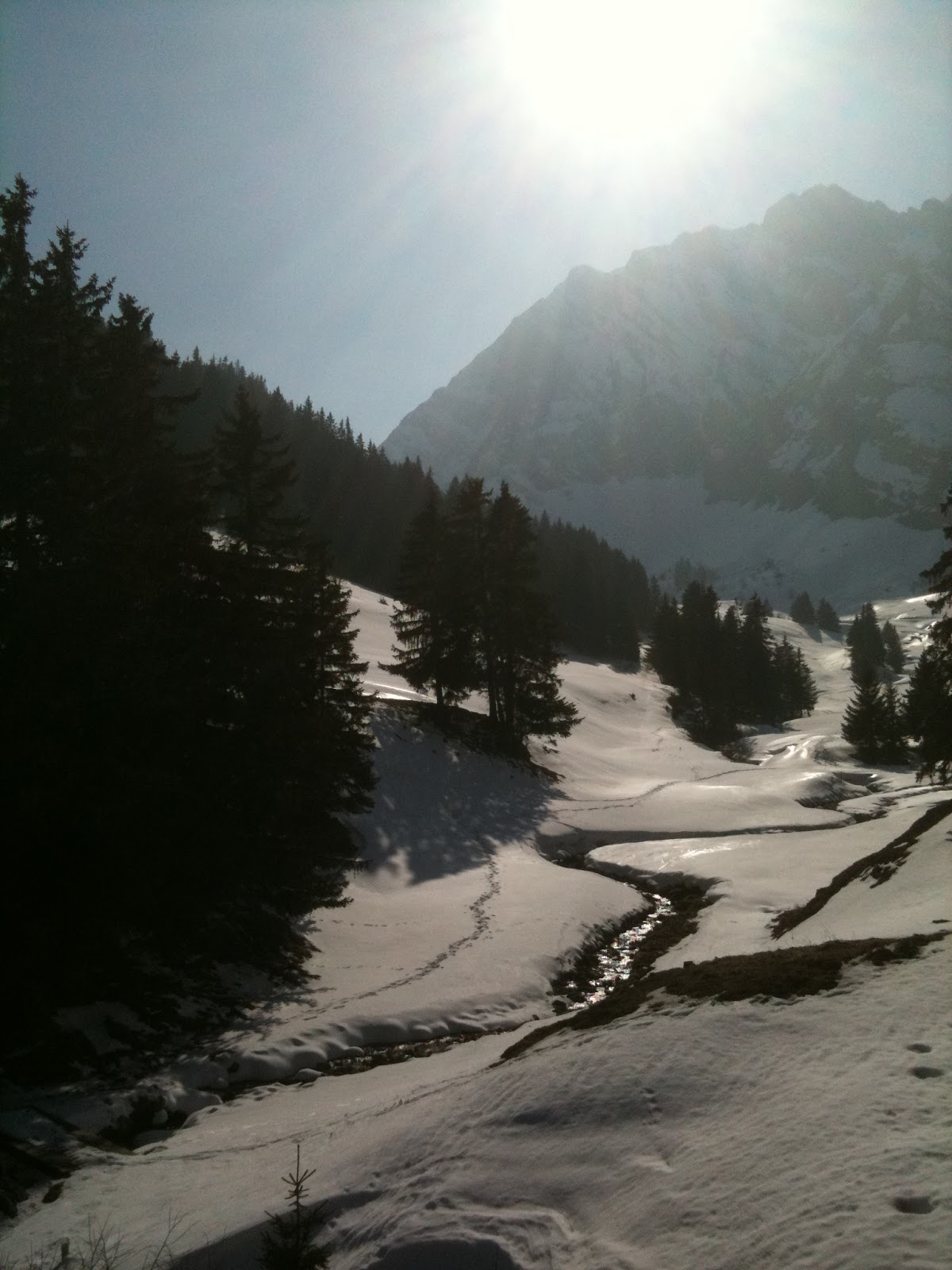
These photos have all been taken while out training in the past few months.

Swimming
I love swimming here. I have two great local pools and I often travel to Annecy to swim with my team, TMT. In summer we have one of the cleanest lakes in Europe, Lake Annecy to train in.


Lake Annecy, a great quiet and safe place for open water swimming


Lake Annecy

Swimming at La Clusaz Pool.
A beautiful, well heated outdoor pool for summer or winter swimming.

La Clusaz pool steaming mid Winter

Hotel Beauregard pool
Small but open long hours and quiet for specific work

Cycling
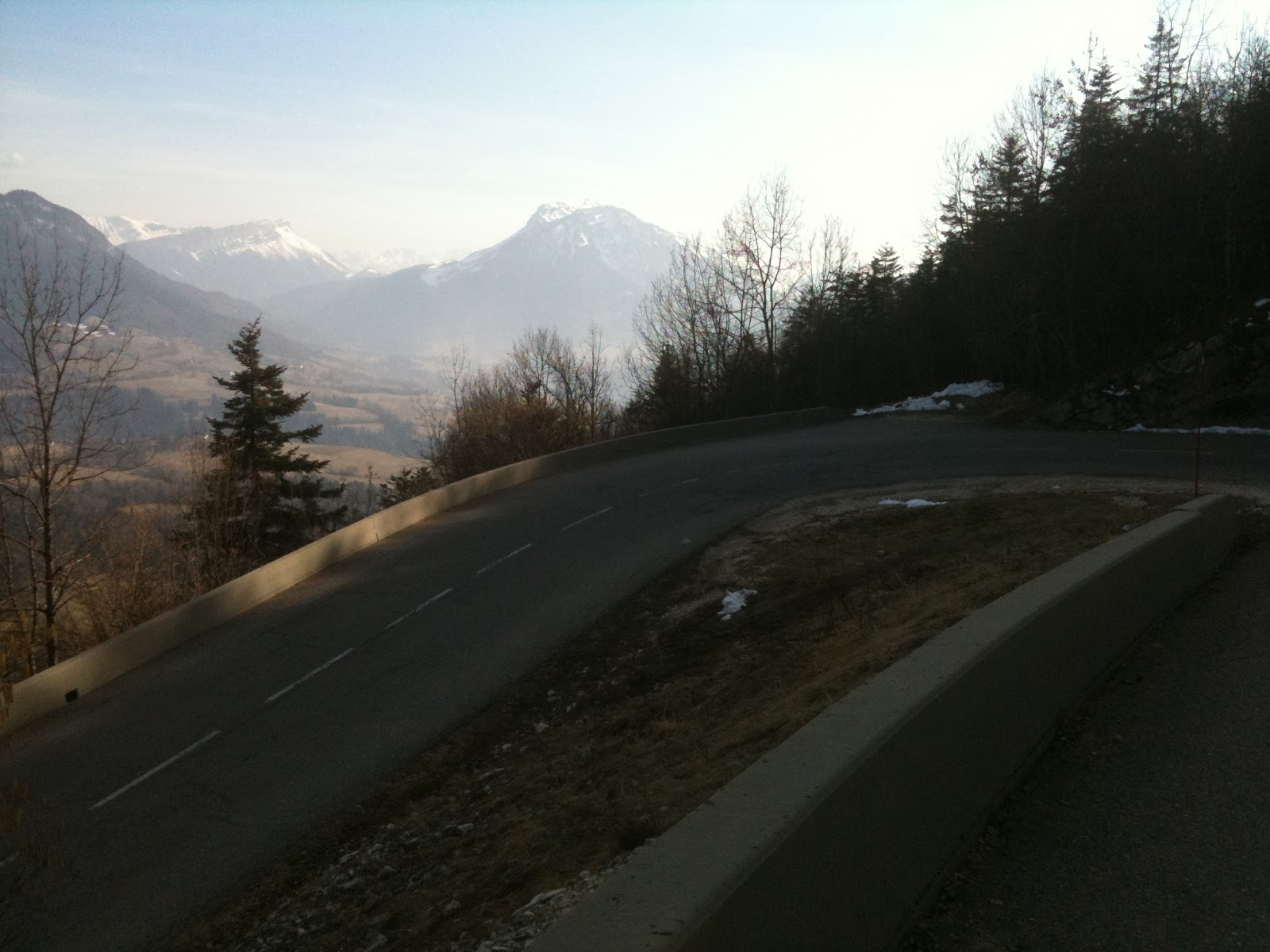
This region is famous for it's cycling. The mountains are spectacular, the cols (passes) are steep, windy and of all lengths, strengths and sizes and the roads in pretty good condition for small mountain roads thanks to the regular visits by the Tour de France and the Dauphine Libre. What is even better from my perspective is the consideration and respect you get from drivers here. Australia could learn a lot from the French in regards to how much more fun it is to share the road rather than fight over it.


Col de Forclaz above Lake Annecy

Col de Colombiere. An open steep descent.
17k down to Cluses and back (or back via the additional fun of Col de Romme)

Col de Romme. Only 9k to the top but at +10% most of the way and maxing at 13% it is a good speed bump.
Double it up with Colombiere and it is a great one!


Col de Croix Fry, up in the ski resort above our village.
In February this year the road was completely free of snow on the south side.
The ski fields were still operating at the top.

Col des Aravis in Winter (I was riding not skiing on this day)
 
Cret de Chatillon / Semnoz from St Jorioz

The cross country trails still had good snow here when I restarted riding Semnoz this year.
Luckily the roads were free of ice.

Looking out to Mt Blanc range from Semnoz


The view heading up Col de Forclaz of the lake and castle on it

A stunnning day in the mountains

My favourite riding partner. Rob riding strong.

Signal de Bessan. A lovely solid climb after heading over Saisses.
Looking out towards Cormet de Roseland
 
Vallee D'Arly, narrow, windy and interesting.
The access or return route to many great cols near us 
 Running
So many options - forest paths, quiet roads, a lakeside running path, a good 400m track a lovely soft dirt 4k riverside loop and yes plenty of mud/snow covered paths.


A beautiful ancient bridge and 16th century chapel on the running path to Thones
Soft forest paths along the Nom River
A track session at Thones.
Cinder tracks are great for training. 

Thones track. Usually hard work here but a lovely quiet place for it.

My home trail, running in the forests around St Jean

Winter hill runs in the evening on Tete de Danay

Snow running (not too much of it this winter) up to Les Confins
Rob and I enjoying a run together at Lake Annecy


Tuesday, September 7, 2010

Mt Blanc race report

So this week I'll not tackle the wonderful topic of women's differences regarding training, as we leave tomorrow to go to Budapest so I can race at the Olympic Distance World Championships. It is 6 weeks since I raced in Immenstadt at the Long Course Worlds. I am only just getting my tiggerishness (bounce) back so the time between the two has been good. I am looking forward to the opportunity to race in a big field of fantastic athletes from around the world, including a big contingent from Australia.

I have only raced once between the two world champs, at the Mont Blanc Tri in Passy 10 days ago. That was a really beautiful olympic distance race in the Chamonix Valley with Mt Blanc at 4,808m providing a perfect snow capped backdrop.
Although I would have only given myself about a 6/10 for my race performance, it was great fun as it was a stunning place and day, there were lots of Team Mermillod Triathlon (my French club) folk there, as well as the one and only Crew Chief (my husband, Rob) who had his first Northern Hemisphere race experience, and my parents who were visiting from Oz so they had a chance to see what racing here was all about and hang out with the boys in the great playgrounds by the lake on a warm summer's afternoon.

So I guess my thought for this week is about fun vs performance in racing. I love racing as it is a chance to push myself harder than in training and see what comes out against a field of peers and my own expectations. I love the atmosphere of race day and the challenge it provides everyone which drives that great individual feeling of achievement and the comraderie afterwards when everyone has overcome whatever challenges they faced on the day, and mostly feel good about their efforts.

But what if you have a bad race, or like I did, just a so so one? Do you let it ruin your day, or worse threaten your enjoyment of your next block of training or the sport more generally? I hope not.

Rudyard Kipling had a great quote my grandfather loved from the poem "If" about this
If you can dream - and not make dreams your master
If you can think - and not make thoughts your aim;
If you can meet with Triumph and Disaster
And treat those two impostors just the same
I read this to mean, it is good to dream big, aim high and set challenging goals for yourself, but not lose the enjoyment of what you do either to achieve success, or as a result if you fail to achieve it. Triathlon is an excuse for a great journey and the outcome that it provides, good, indifferent or bad is very much secondary to the fun of getting there. Let's be real, very few athletes in this sport make a real living out of it, so the outcome is more about personal satisfaction and validation of the effort than anything else.
So, in practice... I really had a pretty average race at Passy, going off course in the swim and not really hitting rhythm in it anyway, having a solid bike (finally strong on the descents where I outpaced the guys around me as well as on the one steep climb each lap) and an ok but not great run given I had been having some knee trouble leading up to it. But it didn't really matter all that much as I was happy coming 4th overall given I wasn't feeling ready to race again in the week leading up to it. I still won the veteran femme category and although it would have been nice to be in top 3 which was my goal, I really admire all three athletes who beat me and they well earned their place in front that day.

So performance vs fun. An ex coach of mine used to sneer at the "fun" word regarding training or racing. I disagree. I love triathlon because it is fun for me, even when I am hitting the red zone at the end of a race, I enjoy the challenge and the atmosphere. That is why I do it. I loved that Rob got to race with me that day and excelled himself in it. He had a fantastic race on far more limited training time than I get. He loved the opportunity to be out there amongst it again. His race report is linked here if your are interested.

http://thecrewchief.blogspot.com/

I meanwhile had to manage my head after a poor swim to reset and enjoy tackling the field as usual from behind. I am not as strong a swimmer as bike / runner so tend to do this every race anyway. I joke that I am like Pharlap, the famous Australian racehorse that raced better when held back at the start of the race to then fly through the field from the back. Well, ok, I am just not a very good swimmer so don't really hold back by choice, but riding and running through the field is kinda fun! I just gave myself a bit more of a starting handicap that day. Not getting frustrated by what has already past is a necessity in enjoying racing. This is particularly true in longer courses where there is more time for stuff to happen, lulls, flat tyres, cramps ...

Enjoying the run
So I reset the head after my swim and by the end of the first descent on the bike, was loving being on course and taking my usual approach which is, if I can keep up with the majority of the guys I am racing with, and overtake more overall than I let pass me, then I will find the girls up there in front. It worked and I slowly moved through the field from 12th to 4th through the bike and run. I often try and find someone to pace with on the run, going just a bit faster than I comfortably would go by myself. I did for just over a lap at Passy. A lovely guy who chatted amiably in French to me when he had the spare breath, some of which I understood and much of which, in my tired and focussed race state, I missed. Apologies! The lead on the first three strong girls was too much to close though. So, 4th and and ok race, but plenty to enjoy and learn from.

I managed to win some flowers that I could give
to Mum for being, well, my Mum!
After the race I really enjoyed the time with Rob, the other girls I knew from previous races, TMT club members, my boys and parents. Triathlon is really just a great excuse for bringing together lovely people. We relaxed for a few hours by the lake and by then I was ready for some more. So I took the option to ride the 50k home via Megeve and Col de Aravis and enjoyed the early evening in the mountains.

So lots of learning to take to the next race at the World Champs this weekend to be even better mentally and physically prepared and of course, enjoy even more!

So, enjoy your day too, whatever the outcome.
A bientot!
Christine

Sunday, August 15, 2010

Images of training around the Aravis Valley

Cycling is wonderful here, in Summer and some of Spring and Autumn anyway. Great fairly quiet roads with respectful drivers (very different to riding in Sydney!) stunning mountain passes in every direction from home and some good flat speed work around Lac Annecy or near Thones.

Some of my favorite rides so far include;
  • Home from Italy: Petit St Bernard to Bourg St Maurice, up Cormet de Rosilend, to Beauford, up Col de Saisses and down to Flumet, up Col de Aravis and home. 5:45hrs, 140kms
  • A very local TdF Classic: St JdS (St Jean de Sixt) to Col de Colombiere down to Reposoir, Up to Col de Romme, down to Clusas and return the same way via Romme then Colombiere. 3:45hrs, 80kms
  • Lets Gets Morzine! St JdS up Col de Colombiere down to Clusas, cross the valley and up to Taninges, then onwards, upwards to the ski resort of Les Gets before a short descent into Morzine. Coffee in the main square and then had home the same way or chose to take on one additional climb up the beautiful Col de la Joux Plane with its steep rough descent into Samoens. Back to Cluses and then directly over Colombiere which is a steady 17k ascent or take a further minor detour up Col de Romme (steep 9k ascent) then descend into Reposiore and last 7k of the climb up Colombiere. Lovely open descent into Grand Bornand to get home. 6hrs, 125k home to Morzine return incl Romme, or 143k if add Col de la Joux Plane but no Romme.
  • Dinner in Cham: St JdS to Chamonix via Col de Aravis, Megeve, St Gervais les Bains, Servoz. Les Houches and on to Cham for dinner. 
Here is a great site with some of the major cols detailed by distance, grade etc.
http://www.climbbybike.com/cycling.asp?Region=Rhone-Alpes&RegionID=267

Saturday, April 17, 2010

Pack up kids, it's bell time soon

So twelve days to go until we fly north to France to start our new adventure in the Haute Savoie, and it feels like an inverted Christmas countdown.

Every day for these twelve days we will give something away (including sleep, calm and very possibly our sanity) until we fly out from Sydney next Thursday. Today we are trying to give away our car, at least for that we will ask for some cash in return, a trampoline to the neighbours over the fence and exchange a patch of dirt for some well grassed lawn at the cost of A$60 in rolled turf and a slightly sore back.

Next Thursday our little clan, including Christine and Rob (aka Mum and Dad) and Jackson and Liam (aka Master Trouble and Senior Strife) head to Europe for a year or three to learn about life from a different perspective. Establishing our base in a small rural town high in the French Alps, we are going to create a mountain life together, training for and racing triathlon in summer, sking in winter and investigating the mountains by foot, bike, rope, ski or snow shoes throughout the seasons. All this outdoor activity of course will need to be appropriately balanced with hanging out together as a family, eating fresh bagette, visiting cool old towns and drinking hot chocolate, coffee or red wine depending on age and time of day.
So, 12 days to finish packing up our life and leave our beachside, city existance surrounded by good friends and family, stunning but crowded beachs, corporate jobs, tight schedules, training, and regular but known stress to enjoy a very different European adventure.